
Humanoid Robots or Human 2.0: The Future of AI in 2030
- Glenn Riley
- May 10, 2024
- 13 min read

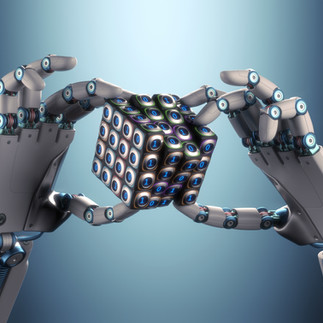
Imagine a world where robots not only coexist with humans but also possess the same level of intelligence, agility, and emotional intelligence. A world where artificial intelligence has advanced to the point where humanoid robots are indistinguishable from humans, blurring the lines between man and machine. This may sound like the stuff of science fiction, but the reality is that we are rapidly approaching a future where humanoid robots, or "Human 2.0," will become an integral part of our daily lives. By 2030, AI is expected to have reached unprecedented heights, with robots capable of performing tasks that were previously thought to be the exclusive domain of humans. From healthcare and education to space exploration and beyond, the implications of humanoid robots are far-reaching and profound. In this blog post, we'll delve into the exciting possibilities and potential consequences of this emerging technology, and explore what the future of AI might hold for humanity.
1. Introduction to Humanoid Robots: What's the Hype?
Imagine a world where robots, indistinguishable from humans, walk among us, seamlessly interacting with their surroundings and performing tasks with precision and ease. This is no longer the realm of science fiction, but a rapidly approaching reality. Humanoid robots, the culmination of artificial intelligence, machine learning, and advanced robotics, are poised to revolutionize the way we live, work, and interact with each other. The hype surrounding humanoid robots is not just about their futuristic appeal, but about the transformative potential they hold to augment human capabilities, improve our daily lives, and redefine the boundaries of what it means to be human. As we hurtle towards 2030, the possibilities are endless, and the questions are many: Will humanoid robots become an integral part of our workforce, our homes, and our social circles? How will they change the fabric of our society? And what does this mean for the future of humanity?
2. The Current State of AI: Where We Are Today
As we stand at the threshold of a new decade, it's essential to take stock of the remarkable progress Artificial Intelligence (AI) has made in recent years. Today, AI is no longer a futuristic concept, but a tangible reality that's already permeating various aspects of our lives. From virtual assistants like Siri, Alexa, and Google Assistant, to image recognition systems, natural language processing, and machine learning algorithms, AI has become an integral part of our daily experiences.In the business world, AI-driven chatbots are revolutionizing customer service, while predictive analytics and automation are streamlining operations, enhancing efficiency, and driving growth. In healthcare, AI-powered diagnostic tools are helping doctors make more accurate diagnoses, and personalized medicine is becoming a reality.Moreover, AI-infused robots are already being used in manufacturing, logistics, and even space exploration. The likes of Sophia, Pepper, and Jia Jia have shown us that humanoid robots are no longer the stuff of science fiction, but rather a tangible reality that's being refined and improved with each passing day.As we gaze into the crystal ball, it's clear that the current state of AI is merely a precursor to the exponential advancements that await us in the decade to come. With AI 2.0 on the horizon, the possibilities are endless, and the future of human-AI collaboration is set to redefine the very fabric of our existence.
3. The Evolution of Humanoid Robots: From Sci-Fi to Reality
The Evolution of Humanoid Robots: From Sci-Fi to RealityAs we fast-forward to the year 2030, the concept of humanoid robots is no longer a distant fantasy, but a tangible reality that's redefining the boundaries of artificial intelligence. The once-fictional depictions of humanoid robots in movies like Blade Runner, I Robot, and Ex Machina are now being brought to life in laboratories and research facilities around the world. The evolution of humanoid robots has been a remarkable journey, marked by significant advancements in robotics, machine learning, and computer vision.From the early prototypes of humanoid robots, such as Honda's ASIMO and Boston Dynamics' Atlas, to the more sophisticated models of today, the pace of innovation has been breathtaking. Today's humanoid robots boast advanced features like artificial skin, agile limbs, and intelligent sensors that enable them to navigate complex environments with uncanny ease. They're capable of performing tasks that were previously thought to be the exclusive domain of humans, such as recognizing and responding to facial expressions, understanding spoken language, and even exhibiting emotional intelligence.As we look ahead to 2030, the possibilities are endless. Humanoid robots are poised to revolutionize industries like healthcare, education, and customer service, freeing humans to focus on more creative and strategic pursuits. With their ability to learn, adapt, and interact with humans in a increasingly natural way, humanoid robots are set to become an integral part of our daily lives, blurring the lines between man and machine like never before.
4. Human 2.0: What Does it Mean to be Human in 2030?
As we hurtle towards a future where humanoid robots and artificial intelligence (AI) are increasingly intertwined with our daily lives, a profound question emerges: what does it mean to be human in 2030? The notion of "Human 2.0" represents a paradigm shift in our understanding of humanity, where the boundaries between man and machine are blurred. With AI-powered enhancements, brain-computer interfaces, and advanced biotechnology, the human body is set to undergo a radical transformation.In this brave new world, humans will be able to augment their physical and cognitive abilities, merging the organic and synthetic to create a new form of human existence. The implications are far-reaching, raising fundamental questions about identity, consciousness, and the essence of humanity. Will we still be able to recognize ourselves as humans, or will we have evolved into something entirely new? As we embark on this journey, we must confront the possibility that the human experience, as we know it, may be on the cusp of a revolutionary transformation.
5. AI-Powered Robotics: The Technology Behind Humanoid Robots
As we step into the realm of Human 2.0, the convergence of Artificial Intelligence and robotics is giving birth to a new generation of humanoid robots. These robots are designed to mimic human-like appearance, movement, and intelligence, blurring the lines between man and machine. At the heart of this revolution lies AI-powered robotics, a sophisticated technology that enables humanoid robots to think, learn, and adapt like humans.The AI-powered robotics technology behind humanoid robots is built on a complex framework of machine learning algorithms, computer vision, and natural language processing. This framework allows robots to process vast amounts of data, recognize patterns, and make decisions autonomously. Advanced sensors and actuators work in tandem to enable robots to perceive their environment, manipulate objects, and execute tasks with precision and dexterity.Furthermore, the integration of AI-powered robotics with cutting-edge technologies like 5G networks, Internet of Things (IoT), and cloud computing is poised to unlock unprecedented capabilities in humanoid robots. Imagine a robot that can learn from its experiences, improve its performance over time, and collaborate with humans seamlessly. The future of AI-powered robotics is not just about creating robots that look like humans, but about creating robots that can think, feel, and interact like humans – a prospect that is both exhilarating and unsettling.
6. Applications of Humanoid Robots: Healthcare, Space, and More
As we venture into the uncharted territories of Human 2.0, the possibilities for humanoid robots seem endless. One of the most significant areas where these robots will make a transformative impact is in healthcare. Imagine a world where humanoid robots, equipped with advanced AI and machine learning capabilities, can assist in surgeries, provide personalized care to patients, and even offer emotional support to those in need. They can help alleviate the burden on healthcare professionals, freeing them up to focus on more critical tasks.Beyond healthcare, humanoid robots will also play a crucial role in space exploration. As space agencies and private companies like NASA, SpaceX, and Blue Origin embark on missions to explore and colonize other planets, humanoid robots will be instrumental in navigating the harsh environments of space. They can perform tasks that are too dangerous or difficult for humans, such as conducting repairs, gathering samples, and even establishing a human presence on distant planets.But that's not all. Humanoid robots will also revolutionize industries like manufacturing, logistics, and customer service. They can work in tandem with humans to increase efficiency, reduce errors, and enhance overall productivity. In the realm of customer service, humanoid robots can provide personalized assistance, offer emotional support, and even help with language translation. The possibilities are endless, and as we continue to push the boundaries of AI, we can expect to see humanoid robots becoming an integral part of our daily lives.
7. The Rise of Autonomous Robots: Friend or Foe?
As we venture into the realm of Human 2.0, the lines between human and machine are becoming increasingly blurred. Autonomous robots, equipped with advanced AI capabilities, are poised to revolutionize the way we live and work. These robots will be capable of operating independently, making decisions without human intervention, and adapting to complex environments with ease.Imagine a future where robots are an integral part of our daily lives, assisting us in tasks ranging from menial chores to complex surgeries. They will be our companions, our caregivers, and our collaborators. Autonomous robots will be deployed in various sectors, including healthcare, education, transportation, and manufacturing, transforming the way we approach these industries.However, as we stand on the cusp of this revolution, a pressing question arises: will these autonomous robots become our trusted friends or our formidable foes? Will they augment our human capabilities, or will they pose a threat to our very existence? As AI systems become more sophisticated, the risk of job displacement, bias, and even malice cannot be ignored. The future of autonomous robots is fraught with both promise and peril, and it is our responsibility to navigate this delicate balance, ensuring that these machines are designed to serve humanity, not supplant it.
8. Job Displacement vs. Job Creation: The Economic Impact of Humanoid Robots
As humanoid robots begin to infiltrate various industries, a pressing concern is the potential disruption to the workforce. The rise of Human 2.0 could lead to widespread job displacement, with many tasks being automated, making certain professions obsolete. Imagine a scenario where robots, with their advanced AI capabilities, can perform tasks with greater speed, accuracy, and efficiency than their human counterparts. This could result in significant layoffs, particularly in sectors where tasks are repetitive, routine, or require minimal human judgment.However, it's essential to consider the flip side of the coin. The integration of humanoid robots could also lead to the creation of new job opportunities, ones that we cannot yet envision. As AI continues to evolve, it's likely that new industries and job roles will emerge, focused on the development, maintenance, and training of these advanced robots. For instance, robot ethicists, AI trainers, and robotics psychologists may become essential professionals in the future. Additionally, the increased productivity and efficiency brought about by humanoid robots could lead to economic growth, resulting in new job opportunities across various sectors.The key to mitigating the negative economic impacts of humanoid robots lies in educating and upskilling the workforce, ensuring that humans can work alongside robots, and that the benefits of automation are shared by all. Governments, educators, and industries must collaborate to develop programs that prepare workers for the changing job landscape, enabling them to adapt and thrive in a world where Human 2.0 is an integral part of the workforce.
9. The Ethics of Humanoid Robots: Moral Dilemmas and Conundrums
As we embark on the development of humanoid robots, we must confront the elephant in the room: the ethics of creating artificial beings that mimic human appearance and behavior. The stakes are high, and the moral dilemmas are complex. For instance, if a humanoid robot is capable of experiencing emotions, do we have a moral obligation to treat it with dignity and respect? Should we grant it rights, or is it simply a machine designed to serve humanity?Furthermore, what happens when a humanoid robot, designed to assist and care for humans, is faced with a situation where it must make a life-or-death decision? Can we truly program it to make morally sound choices, or will it be bound by its programming, leading to unintended consequences? The conundrums are endless, and the answers are far from clear.Additionally, the blurring of lines between humans and robots raises questions about accountability and responsibility. If a humanoid robot causes harm to a human, who is liable? The robot itself, the manufacturer, or the human operator? The ethical landscape of humanoid robots is treacherous, and we must navigate it with caution, ensuring that our creations do not become a force that exacerbates human suffering rather than alleviating it.As we hurtle towards a future where humanoid robots become an integral part of our daily lives, it is essential that we engage in open and honest discussions about the moral implications of creating artificial beings that walk, talk, and think like us. The future of AI depends on it.
10. Human-AI Collaboration: The Future of Work in 2030
As we hurtle towards 2030, the landscape of work is set to undergo a seismic shift. The future of AI is not about replacing human workers, but about augmenting their capabilities through seamless collaboration. Human-AI collaboration will revolutionize the way we work, making us more productive, efficient, and innovative. Imagine a world where humans and AI systems work together in perfect harmony, each playing to their strengths. Humans will focus on high-level thinking, creativity, and strategy, while AI handles the mundane, repetitive tasks, freeing up humans to tackle complex problems.In this future, AI-powered robots will assist humans in various industries, from healthcare and manufacturing to finance and education. They will help doctors diagnose diseases more accurately, assist teachers in personalized learning, and enable finance professionals to make data-driven decisions. The possibilities are endless, and the benefits will be immense. With AI handling the grunt work, humans will have more time to focus on what matters most - creativity, empathy, and innovation. As we enter this new era of human-AI collaboration, we can expect to see a significant boost in productivity, job satisfaction, and overall economic growth. The future of work in 2030 is not about humans versus AI, but about humans and AI working together to create a better world.
11. The Future of Humanoid Robots: Predictions and Possibilities
As we venture into the uncharted territories of 2030, the future of humanoid robots is poised to be a realm of unprecedented possibilities. Imagine a world where robots, indistinguishable from humans, walk among us, seamlessly integrating into our daily lives. These advanced humanoid robots, or 'Human 2.0', will not only revolutionize the way we live and work but will also challenge our understanding of what it means to be human.With rapid advancements in artificial intelligence, machine learning, and natural language processing, humanoid robots will possess the ability to think, learn, and adapt at an unprecedented scale. They will be capable of performing complex tasks, from menial labor to sophisticated surgeries, with precision and accuracy. The possibilities will be endless, with robots potentially serving as personal assistants, healthcare providers, and even educators.In this future, we can envision humanoid robots assuming roles that were previously considered the exclusive domain of humans. They will be our companions, our colleagues, and our caregivers. With their advanced cognitive abilities, they will be able to understand and respond to our emotions, creating a new era of human-robot symbiosis. As we embark on this journey, we will be forced to reexamine the boundaries between man and machine, and the implications will be profound. The future of humanoid robots is not just a technological advancement, but a transformative shift in the fabric of our society.
12. Overcoming the Challenges: Technical, Ethical, and Societal Hurdles
As we embark on the journey to create Human 2.0, we must acknowledge the multitude of challenges that lie ahead. The development of humanoid robots is not without its technical, ethical, and societal hurdles. One of the primary technical challenges is creating a robot that can mimic human-like intelligence, emotions, and behavior. This requires significant advancements in artificial intelligence, machine learning, and natural language processing. Moreover, the integration of these technologies into a physical robot that can navigate the complexities of human interaction is a daunting task.Beyond the technical aspects, there are pressing ethical concerns. As humanoid robots become more human-like, we must consider the implications of creating autonomous beings that can think, feel, and act like humans. Questions arise about their rights, responsibilities, and accountability. Will they be treated as machines or as entities with their own agency? The ethical implications of creating a new form of intelligent life are far-reaching and require careful consideration.Furthermore, the societal impact of humanoid robots cannot be ignored. As they become more prevalent, they will disrupt traditional industries, job markets, and social structures. The potential for job displacement, social isolation, and widening income inequality are all pressing concerns. To overcome these challenges, we must engage in open and transparent discussions about the benefits and risks of Human 2.0, and work towards developing policies, regulations, and social norms that ensure the responsible development and integration of humanoid robots into our society.
13. Getting Ready for Human 2.0: How to Prepare for the AI Revolution
As we stand at the threshold of a revolutionary era, where humanoid robots and artificial intelligence are poised to transform the fabric of our society, it's essential to prepare ourselves for the impending AI revolution. The future of Human 2.0 is not just a concept, but a reality that will soon become an integral part of our daily lives. To avoid being left behind, it's crucial to start adapting to the changing landscape of AI-driven technologies.In the next decade, AI will continue to advance at an unprecedented rate, leading to the emergence of new job markets, industries, and opportunities. However, this also means that certain professions will become obsolete, and new skills will be required to thrive in an AI-dominated world. To stay ahead of the curve, it's essential to develop a mindset that's open to continuous learning, upskilling, and reskilling.Moreover, as AI begins to augment human capabilities, it's vital to understand the implications of Human 2.0 on our personal and professional lives. We must be prepared to adapt to new ways of working, collaborating, and interacting with AI-powered systems. By doing so, we can harness the full potential of AI and unlock new levels of productivity, efficiency, and innovation.The AI revolution is not just about technology; it's about transforming the way we live, work, and interact with each other. By embracing this change and preparing ourselves for the future, we can ensure a seamless transition to the era of Human 2.0 and unlock a brighter, more sustainable future for all.
14. Conclusion: Embracing the Future of AI and Humanoid Robots
As we stand at the threshold of a new decade, the future of AI and humanoid robots beckons, promising to transform the fabric of our lives in ways both unimaginable and unsettling. The convergence of artificial intelligence, robotics, and biotechnology is poised to redefine the boundaries of human existence, blurring the lines between man and machine. As we hurtle towards a future where humanoid robots roam among us, it's essential to acknowledge the profound implications of this technological revolution.In 2030, we can expect to see AI-infused robots that not only mimic human appearance but also possess the cognitive abilities to learn, adapt, and interact with their environment in ways that were previously thought to be the exclusive domain of humans. The possibilities are endless, from revolutionizing healthcare and education to redefining the workforce and reshaping the very notion of what it means to be human.As we embark on this unprecedented journey, it's crucial that we engage in a nuanced and informed discussion about the ethical, social, and economic implications of creating humanoid robots that are increasingly indistinguishable from humans. By embracing the future of AI and humanoid robots, we can harness their potential to create a better world, but only if we proceed with caution, wisdom, and a deep understanding of the consequences of our actions. The future is upon us, and it's time to decide how we want to shape it.
As we conclude our journey into the fascinating realm of humanoid robots and the future of AI, we're left with a sense of excitement and trepidation. The possibilities are endless, and the potential for humanity 2.0 to revolutionize the way we live, work, and interact is vast. As we stand at the threshold of a new decade, one thing is certain - the future of AI is upon us, and it's arriving faster than we ever thought possible. Buckle up, because the robots are coming, and they're bringing a brave new world with them. The question is, are you ready?
------------------------------


Comments